




Behind the Scenes: How GDI supports a Data Marketplace
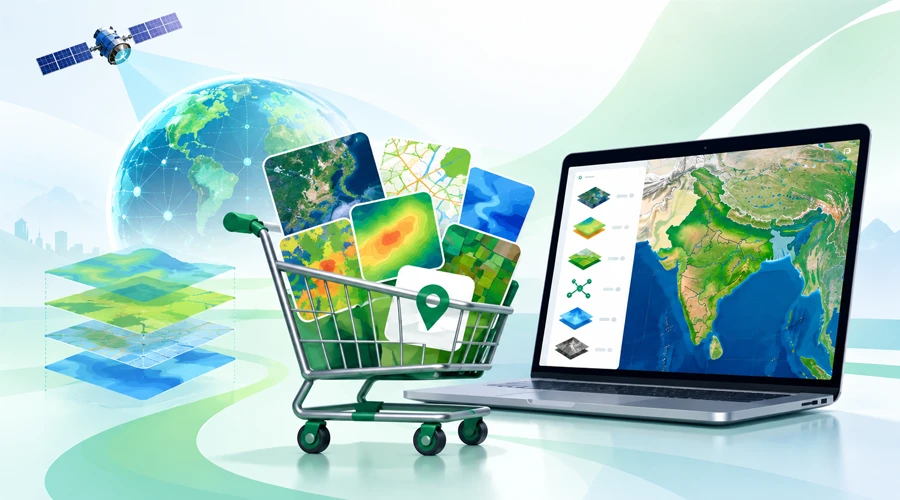
Author: Akhil Pankaj Picture a farmer trying to figure out which of his fields need irrigation this week. Somewhere out there, a satellite has already captured the soil moisture data that would answer his question in seconds. The problem was never that the data doesn’t exist; the problem is getting it into his hands – […]
How does GDI turn raw datasets into discoverable, trustworthy resources?
Author: Akanksha Singh Geospatial datasets are becoming easier to access, but access alone does not make them usable. Before relying on a geospatial dataset, users need the contextual information to understand its origin, quality, coverage, and suitability for their intended application (Figure 1). A high-quality geospatial dataset is more than accurate coordinates or detailed imagery, […]
Building Trust in Geospatial Data: A Customer Driven Data Quality Feedback Mechanism for GDI

When shopping online, we rely on product reviews to make informed purchasing decisions. A 4-star rated laptop with hundreds of user reviews gives us confidence about its performance, while a restaurant with consistent positive feedback becomes our go-to choice for dining. But what if the same principle could be applied to geospatial data? This is […]
AI and the Future of Geospatial: Transformation, Not Replacement

Summary of Keynote Talk by Peter Rabley, CEO, Open Geospatial Consortium: “Will AI Eat Geospatial?” With the advent of Generative AI, a question that intrigues the mind of the Geospatial community across the globe is “Will AI eat geospatial?” With rapid advances in this ‘more than disruptive’ technology that is artificial intelligence, many wonder whether […]
Integrating Spatial Analytics and Routing Algorithms for Flood Response: The FIRS Approach
Author: Sneha R Every monsoon, India braces itself for one of its most persistent natural hazards: flooding. It is driven by intense monsoons, cyclones, tsunamis, or earthquake-damaged dams failure causing extensive loss of life, infrastructure damage, and long term economic disruption. According to the National Flood Commission (1980), about 0.4 million km² of India’s area […]
Breaking Data Silos: How GDI is Transforming Access to Geospatial Information in India
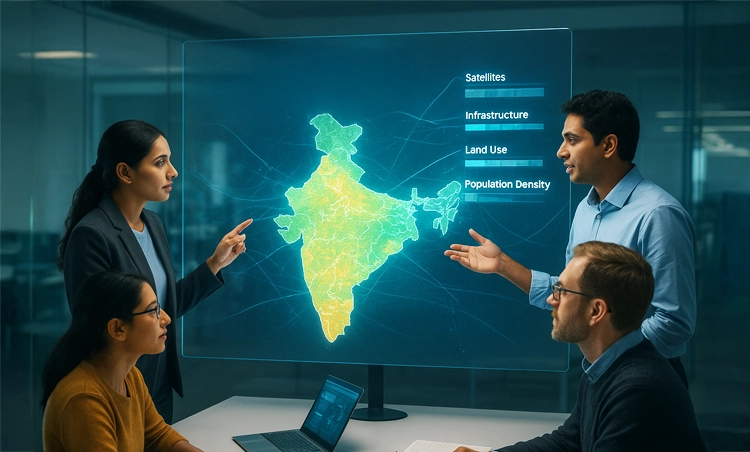
Authors: Bryan Paul Robert,Lead Engineer, CDPG-FSID, IISc Mahidhar Chellamani,Engineering Director, CDPG-FSID, IISc Jyotirmoy Dutta,Director and Principal Scientist, CDPG-FSID, IISc For years, some of India’s most valuable geospatial datasets remained scattered across government departments, research institutes, or private organizations. They held immense potential to transform logistics, strengthen climate resilience, and support smarter urban planning, but they […]
GDI federated node: Smarter way of sharing your data without giving it away!
Introduction Traditionally, data exchanges have relied on a centralized architecture — where both the control plane (responsible for cataloging, authorization, and access management) and data plane (where the datasets are stored and served) are hosted centrally. While functional, this model faces challenges of scalability, data governance, and security risks, especially as data volumes and contributors […]
An Overview of the GDI Python SDK
Authors: Joel Joy, Dr Linda Theres The GDI Python SDK is a command-line toolkit designed to streamline interaction with the Integrated Geospatial Data Sharing Interface (GDI), accessible at https://catalogue.geospatial.org.in. Built to support a wide range of geospatial workflows, the SDK enables users to efficiently access, process, and manage both vector and raster data within a […]
Landslide Damage Assessment, Wayanad, Kerala
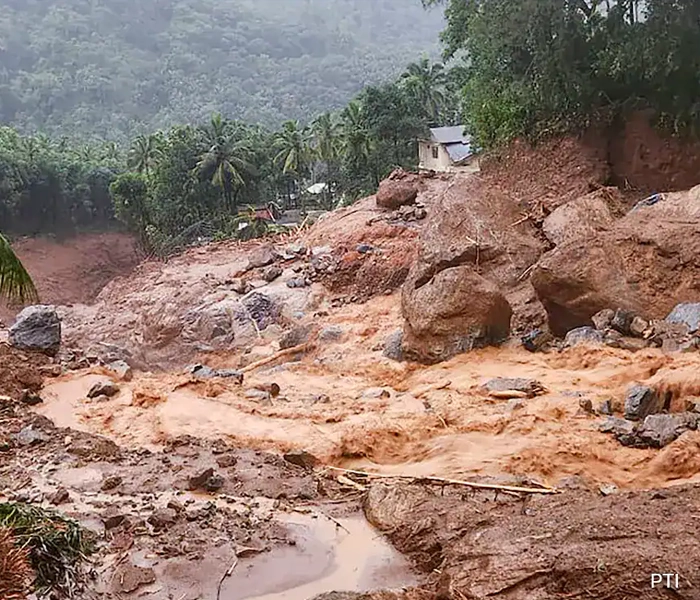
India is experiencing various forms of natural hazards including, earthquakes, landslides, floods, forest fires, cyclones, and drought etc. Among these, landslides are one of the more prominent and devastating natural hazards especially in the hilly areas of the country. The eastern part of Kerala state (Western Ghats) in southern India is highly prone to landslides […]
From Space to Soil: Leveraging Satellite and Weather Data for Flood Damage Assessment and Insurance Claims for Farmers
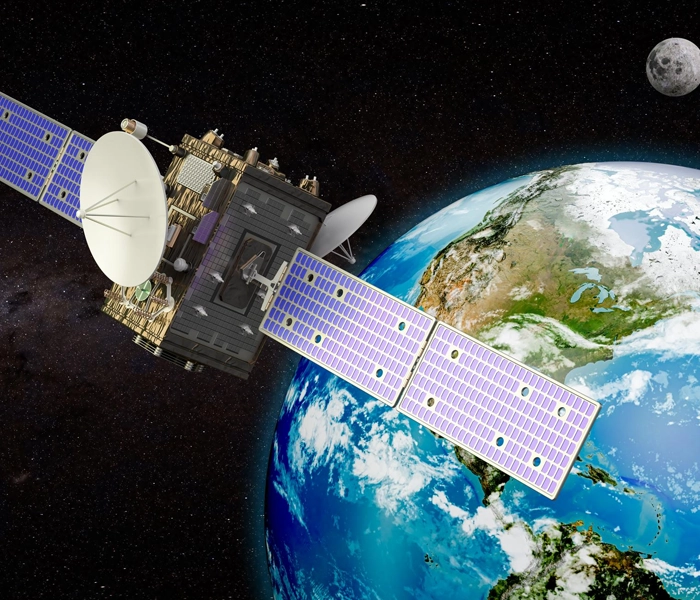
In an era where climate change is bringing more erratic weather patterns, the consequences of heavy rainfall and flooding on agriculture can be devastating. Farmers, particularly those reliant on seasonal crops, are often left in precarious situations, struggling to recover from lost yields. In the early September of 2024, in NTR district of Andhra Pradesh, […]