




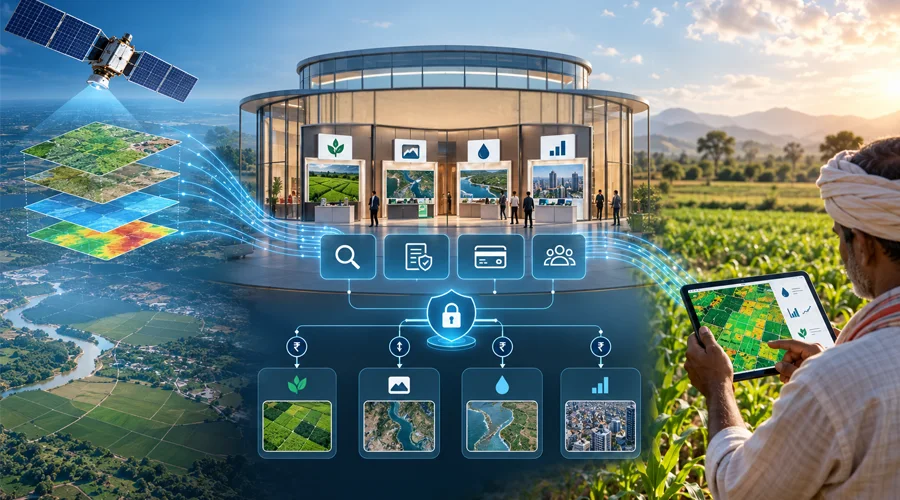
Picture a farmer trying to figure out which of his fields need irrigation this week. Somewhere out there, a satellite has already captured the soil moisture data that would answer his question in seconds. The problem was never that the data doesn’t exist; the problem is getting it into his hands – legally, securely, and in a way that ensures that the people producing it are paid.
That’s the gap a Data Marketplace Platform (DMP) is built to close. And once you get past the acronyms, the way it works is actually pretty intuitive.
The mall, not the store
The easiest way to think about a DMP is as a shopping mall rather than a single shop. The mall’s management doesn’t own the merchandise inside any store; it handles who gets let in, checks that everyone has paid, and points you to the right door. Each store still stocks its own shelves and answers for its own taxes. The payment side is really where the analogy shifts from a mall to an online marketplace- think Amazon or Swiggy, where you check out once through a single, shared payment flow, but the money doesn’t pool with the platform, it’s routed straight into that specific seller’s own account.
In DMP terms, that “mall management” layer is called the Control Plane. It handles discovery (so you can find the dataset you need), authorization (so only paying, permitted users get in), and issues something called an access policy, essentially a digital ticket that says “yes, this person is cleared to pull this data.”
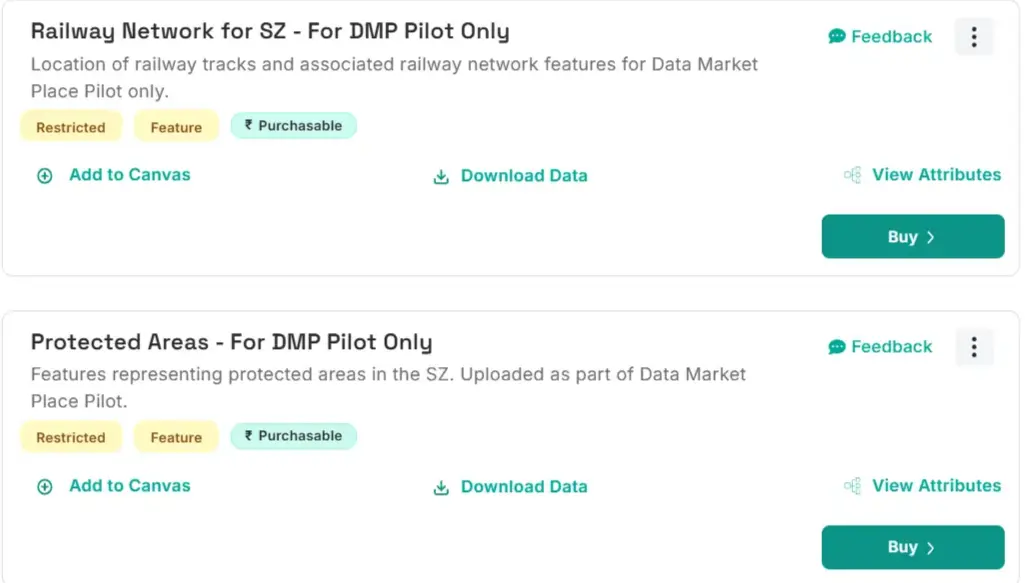
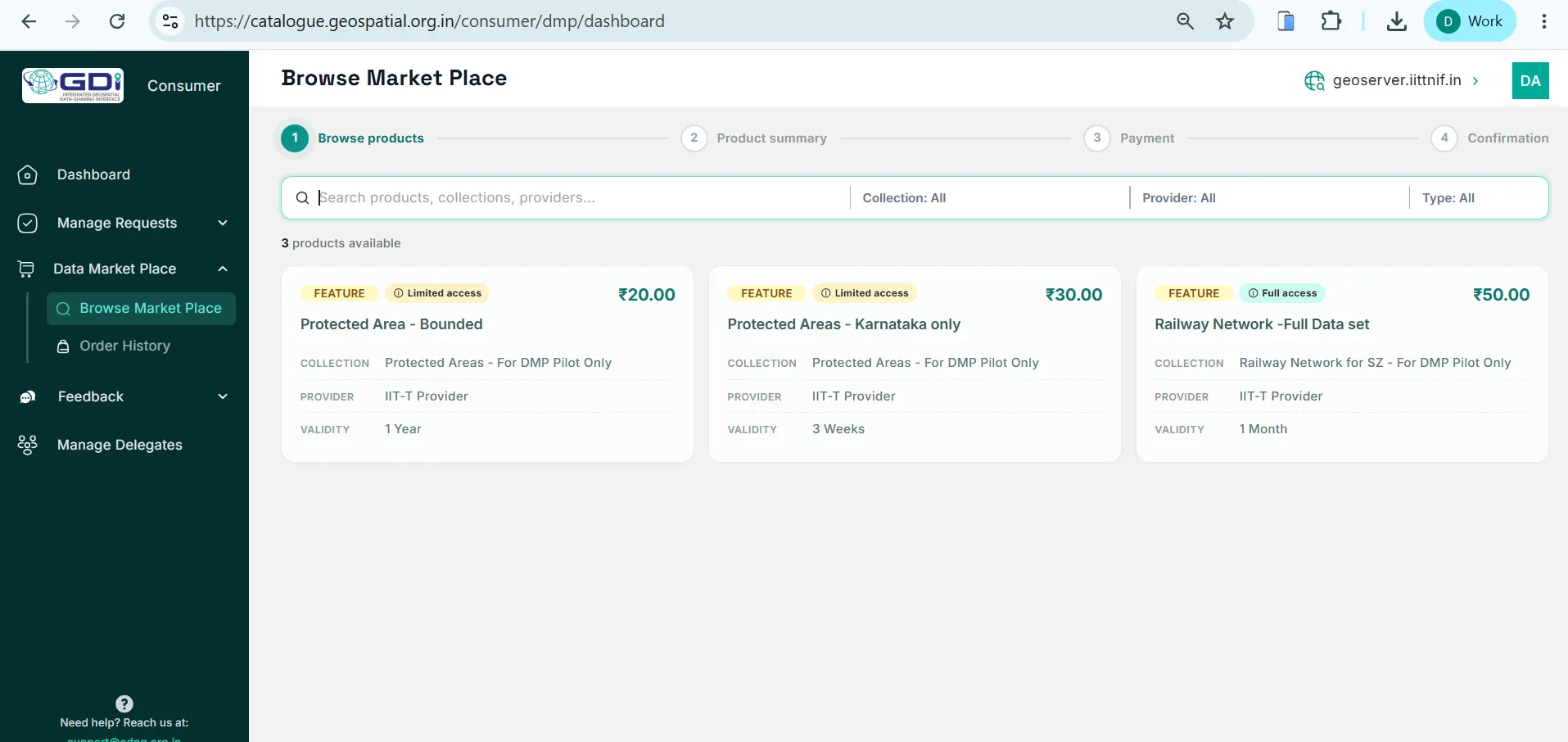
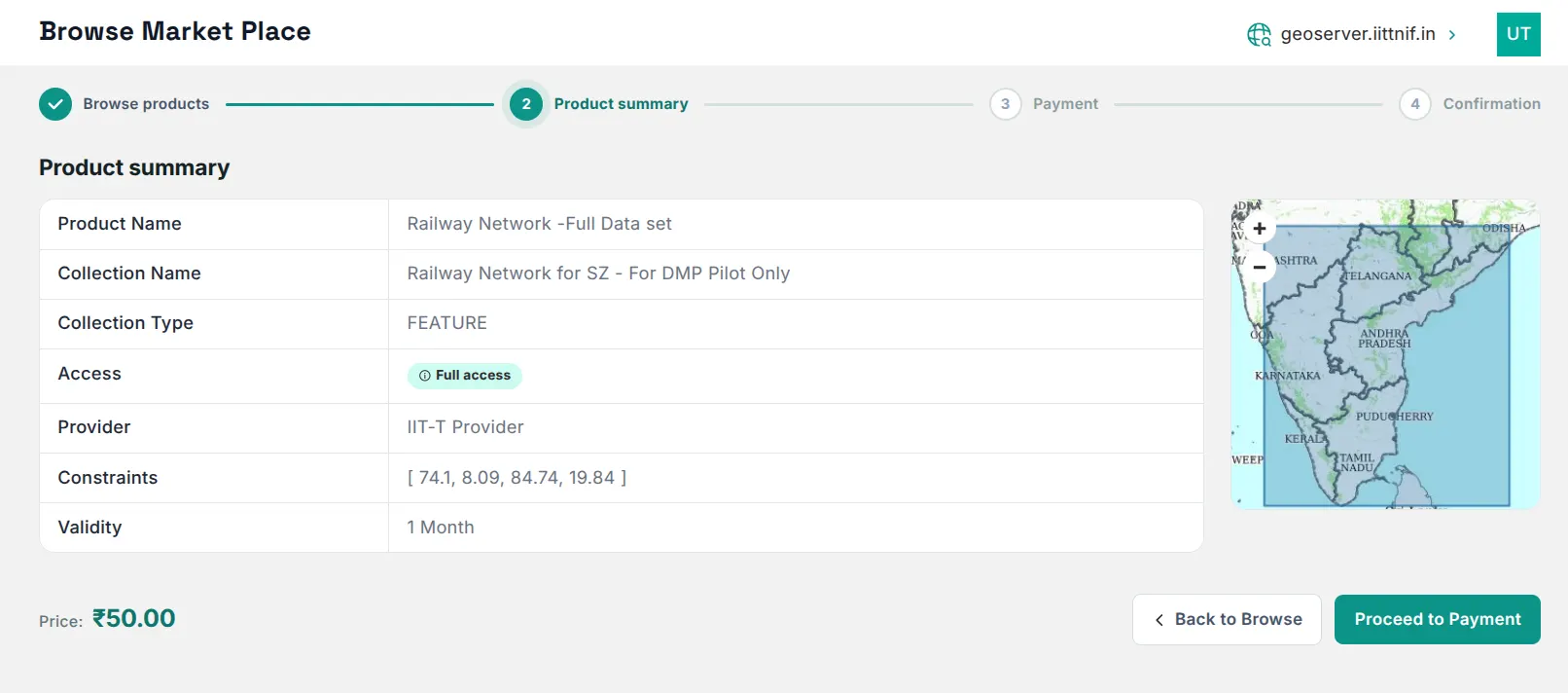
The actual data, though, never passes through the mall office. It flows directly from the seller’s own systems – the Data Plane – to the buyer. Every seller, called a Data Provider, is onboarded by a Node Administrator, who runs their own Data Plane. A Node Administrator has to request the Control Plane to become a Merchant of Record (MoR) in order to start allowing its Data providers to monetise their datasets.
Whose name is on the receipt?
Here’s where it gets interesting legally. Instead of the marketplace itself being financially and legally responsible for every transaction, each Node Admin is set up as its own MoR. That’s a specific legal role: the entity that’s on the hook for collecting the right taxes, honoring refunds, and answering to payment regulators for that sale. Rather than the platform absorbing all of that liability centrally, it’s distributed to whoever actually hosts the data being sold.
The underlying architecture
None of this works without payments happening cleanly across many independent sellers, each potentially using different bank accounts and tax registrations. That’s handled by a Payment Abstraction Layer – a layer that lets the platform plug in different payment processors (Razorpay, to start) without rewriting the core system for each one. Every provider’s payment credentials are encrypted using envelope encryption through a Key Management Service, meaning each key is itself locked away by another key, so a breach in one place doesn’t expose everyone’s secrets at once.
When a payment comes in, the platform doesn’t just take a webhook’s word for it: it verifies the notification through separate layers of cryptographic signature checks before treating the payment as real.
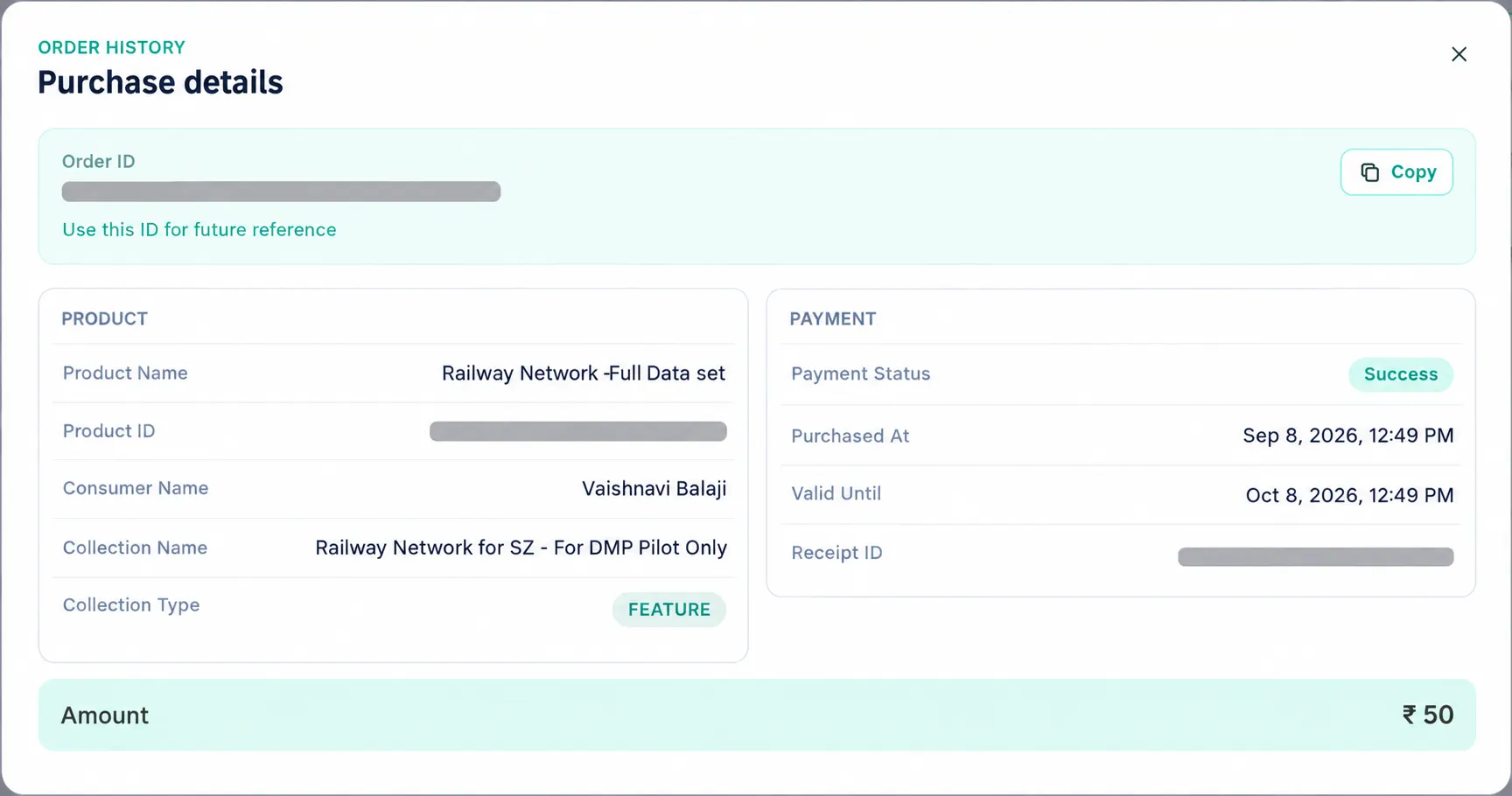
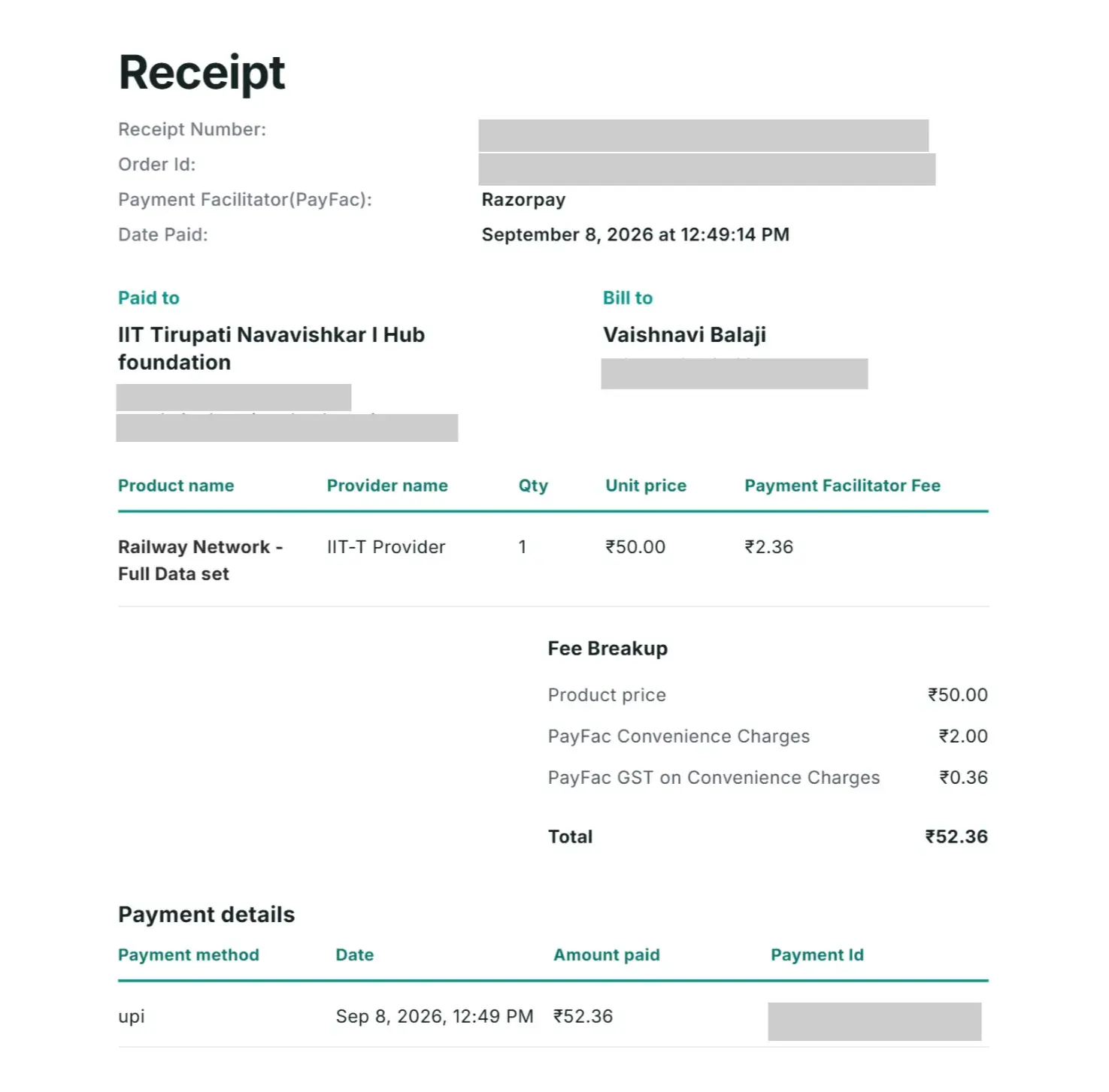
And the paperwork follows a clean, honest lifecycle: a quote before money changes hands, and a proper receipt only once payment is actually captured. No receipt sits around in limbo marked “pending” or “failed”; if it wasn’t paid, it simply doesn’t exist yet as a receipt.
Why bother with all this?
Strip away the terminology and what’s left is a simple idea: let many independent data providers sell through one shared front door, without asking any of them to give up ownership, compliance responsibility, or control over their own data. For spatial data that feeds into agriculture, disaster response, and public health, that kind of trustworthy plumbing is what turns valuable information into the hands of a farmer deciding which field to water, the health worker tracking an outbreak, or the responder racing a flood forecast- the people this entire system was built to serve.